


Platelet Rich Plasma (PRP)
Knee pain shouldn't decide how far you walk.
Or whether you travel, play a round, or get down on the floor with your grandchildren and back up again. If arthritis or an old injury has started making those decisions for you, there may be another option before surgery.
Get Well. Live Better.
Cortisone stopped working. Surgery is the word your orthopedist keeps using. There's a step in between.
Platelet-rich plasma won't help everyone, and we'll be the first to say so. But for the right joint — worn, painful, and still with space left — it may buy years of walking, travel and golf before a replacement is ever on the table.
At Sarasota Spine & Joint, PRP is one tool inside a physician-led program. Whether you get it depends on what the exam and imaging actually show — not on whether you asked for it.
What PRP Is
Your own blood, concentrated and placed where it's needed
Your blood carries the signals your body uses to repair itself. PRP concentrates them and puts them exactly where the joint or tendon is worn. Nothing donated, nothing synthetic — drawn from your arm, prepared in the room, injected the same hour.
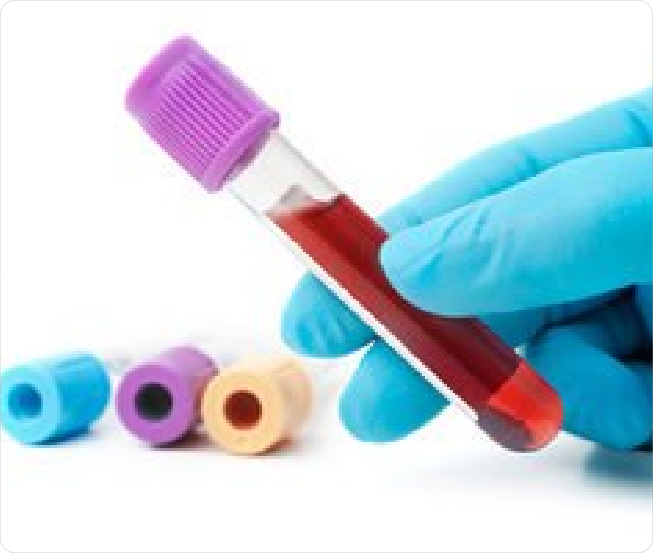
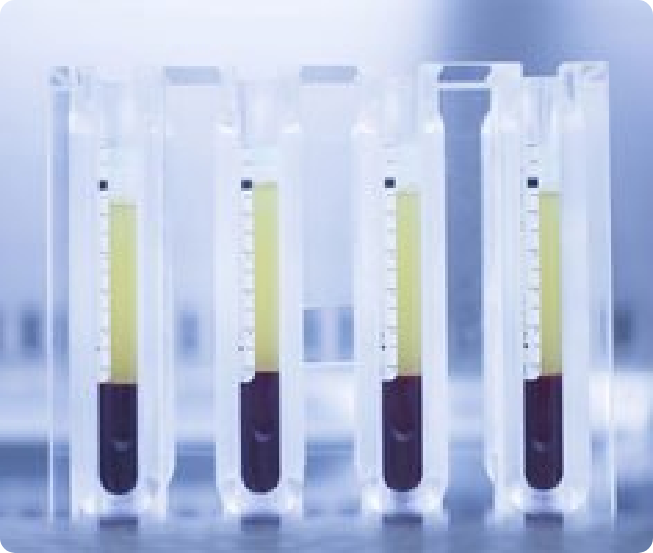
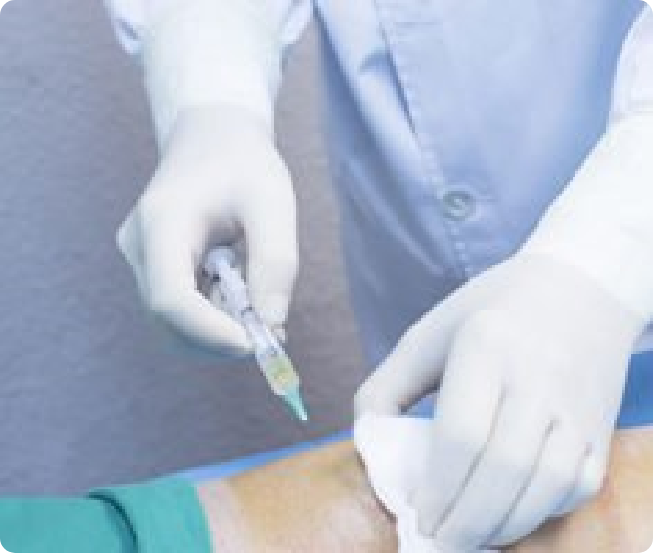
The honest limit: PRP does not regrow cartilage. The realistic goal is less pain and better function. Anyone promising new cartilage is ahead of the evidence.
Why Our PRP Program Is Different
PRP isn't the product. The diagnosis is.
A lot of places sell a PRP injection the way a car wash sells a wax. We don't. PRP here is one tool inside a physician-led program — and some patients who come in asking for it leave with a different plan: viscosupplementation their insurance covers, a course of PT, or an honest referral to a surgeon. That's not a failed sale. That's the program working.

A real medical evaluation first
A physician takes your history, examines the joint, and reviews your X-ray or MRI. If you don't have imaging, we get it. Nobody is injected on a hunch.
Fluoroscopic & ultrasound precision
PRP is placed under real-time imaging so the physician confirms it's exactly where it needs to be. The best preparation in the world does nothing in the wrong spot.
Rehab and PT under the same roof
Our team includes a Doctor of Physical Therapy. The injection is step two; getting the muscles around the joint working again is what makes it last.
Physician oversight, start to finish
An MD and a DO on staff — not a technician following a protocol card. A physician decides whether PRP, viscosupplementation, PT or a surgical referral is right for you.
Who Is a Candidate
The single most important question on this page
Patient selection is the biggest driver of results in the published research. The same injection that helps one joint does nothing for another — and the difference is usually visible on an X-ray before anyone picks up a syringe.
PRP is worth discussing if you have…
- Mild-to-moderate arthritis with joint space still visible on imaging
- Pain that PT, medication or bracing haven't resolved
- Cortisone injections that help less each time
- A tendon, ligament or meniscus issue that hasn't settled
- A desire to stay active and delay — or avoid — replacement
- General good health and a normal blood count
We'll likely recommend something else if…
- Your joint is bone-on-bone with little or no space left
- You have an active infection, anywhere
- You have active cancer or a history of blood cancer
- You have a bleeding disorder, low platelets or severe anemia
- You're on blood thinners that can't be safely paused
- You're pregnant
Your Options, Side by Side
PRP vs. cortisone vs. gel injections vs. surgery
We offer three of these four in-house. The right one depends on your imaging and your goals — not on which one pays us the most.
| PRP | Cortisone | Gel (viscosupplementation) | Joint replacement | |
|---|---|---|---|---|
| What it does | Delivers your concentrated growth factors to worn tissue | Calms inflammation fast | Adds lubrication to the joint | Replaces the joint surfaces |
| Surgery? | No | No | No | Yes |
| When you feel it | 4–8 weeks | Days | 2–4 weeks | After months of recovery |
| How long it lasts | 6–12 months reported | Weeks to months, fading each time | 4–6 months per series | Years |
| Repeatable? | Yes, usually a series | Limited — may speed cartilage loss | Yes, usually annually | Revision possible but major |
| Insurance | No — self-pay | Usually yes | Often yes, Medicare included | Usually yes |
| Best for | Mild-to-moderate arthritis; cortisone non-responders | Sudden flare-ups | Arthritis where lubrication is the limiter | Bone-on-bone joints |
PRP Our regenerative option
- What it does
- Delivers your concentrated growth factors to worn tissue
- Surgery?
- No
- When you feel it
- 4–8 weeks
- How long it lasts
- 6–12 months reported
- Repeatable?
- Yes, usually as a series
- Insurance
- No — self-pay
- Best for
- Mild-to-moderate arthritis; cortisone non-responders
Cortisone
- What it does
- Calms inflammation fast
- Surgery?
- No
- When you feel it
- Days
- How long it lasts
- Weeks to months, fading each time
- Repeatable?
- Limited — may speed cartilage loss
- Insurance
- Usually yes
- Best for
- Sudden flare-ups
Gel Viscosupplementation
- What it does
- Adds lubrication to the joint
- Surgery?
- No
- When you feel it
- 2–4 weeks
- How long it lasts
- 4–6 months per series
- Repeatable?
- Yes, usually annually
- Insurance
- Often yes, Medicare included
- Best for
- Arthritis where lubrication is the limiter
Joint replacement
- What it does
- Replaces the joint surfaces
- Surgery?
- Yes
- When you feel it
- After months of recovery
- How long it lasts
- Years
- Repeatable?
- Revision possible but major
- Insurance
- Usually yes
- Best for
- Bone-on-bone knees
Durations are published averages, not promises. If gel injections fit your case, we'll often suggest them first — because your insurance may pay for them.
The Process
Three steps. The first one is free.
Evaluation
A physician examines the joint, reviews your imaging (or orders it), and tells you honestly whether PRP is a sensible option — or whether gel injections, PT or a surgical referral is the better move.
No cost · ~30 minutesPRP Procedure
Blood draw, centrifuge, and a fluoroscopic- or ultrasound-guided injection, all in one visit. Most patients drive themselves home. Expect soreness for 24–72 hours and skip NSAIDs during that window.
One visit · ~60 minutesFollow-Up & Recovery
We track pain and function at 4–8 weeks and pair the injection with rehab from our in-house DPT. If you're not responding, we say so and adjust — we don't just sell you the next shot.
Reassess at 4–8 weeksSee What Our Patients Have to Say
From people who came in for their knees
"I refused to get a knee replacement recommended by my orthopedist. After treatment at Sarasota Spine my knees feel better than they have in 12 years. I walk 2 miles each morning and evening. I could barely get to the mailbox 2 months ago."
Alfonso F.Knee patient · Google review"I've never engaged with doctors who have such clarity of focus, compassionate intelligence and diligence in care. I had more results in 2 visits than 5 weeks elsewhere."
Donna S.Google review"After I tore my right hamstring, I needed proper rehab as well as help recovering from two bulging discs. Sarasota Spine and Joint put me on the road to recovery fast."
Alan T.Google reviewIndividual results vary. Reviews reflect each person's experience and are not a guarantee of any outcome; they may relate to treatments other than PRP.
Questions
What people ask before they book
How many injections will I need?
Usually a series, not a single shot. Most evidence-supported protocols use one to three injections spaced a few weeks apart. We'll give you the plan at your evaluation, not one visit at a time.
Does it hurt?
The draw feels like routine lab work. The injection is usually pressure or fullness rather than sharp pain, and we numb the skin. Expect soreness for 24–72 hours afterward — that's the intended response, not a problem.
How long until I notice improvement?
PRP isn't a numbing shot, so not immediately. Most people who respond notice a change between 4 and 8 weeks, with function continuing to improve over 3–6 months. If you feel nothing by week 8, tell us — that changes the plan.
Will insurance pay?
No. PRP for joints isn't covered by Medicare or commercial insurance; it's self-pay, and costs are reviewed at your consultation before any decision is made. Medicare's own coverage policy calls PRP for joint conditions "not medically reasonable and necessary." Gel injections (viscosupplementation) often are covered, which is why we sometimes suggest them first.
Can I exercise afterward?
Walking is fine right away. Hold off on high-impact activity — running, jumping, heavy squats — for the first several days, and skip NSAIDs (ibuprofen, naproxen) for the window we give you, since they work against the mechanism. Our DPT will give you a return-to-activity plan.
Am I too arthritic for this?
Maybe. If your joint is bone-on-bone with little or no space left, PRP is unlikely to help meaningfully and we'll say so. The best candidates have mild-to-moderate wear with space remaining. An X-ray usually settles it in one look — and the evaluation is free.
Is PRP FDA-approved?
No. PRP isn't FDA-approved for arthritis. The centrifuge device is FDA-cleared as a blood cell separator, and injecting the result into a joint is off-label use — lawful and common when backed by evidence and physician judgment, but not "approval." Be wary of any clinic that says otherwise.
Do I need a referral?
No. Book directly. If you have recent X-rays or an MRI, bring them — it makes the evaluation faster and more concrete.
Insurance & Payment
PRP is self-pay. Several alternatives may be covered.
PRP for joint and tendon conditions isn't covered by Medicare or commercial insurance. Costs are reviewed in full at your no-cost consultation, before any decision is made — no surprises at the front desk.
What may be covered instead
If cost is the barrier, ask about viscosupplementation, physical therapy and bracing — all offered here, and often covered by Medicare and most commercial plans when criteria are met.





Insurance logos refer to covered services such as viscosupplementation and physical therapy. PRP is not covered by any insurer.
The First Step
Find out if you're a candidate. The consultation is free.
The first thing we offer isn't an injection — it's an honest answer. A physician examines the joint, reviews your imaging, and tells you whether PRP makes sense, or whether something else does. No charge. No pressure.
- 941-265-8664
- 3900 Clark Rd (H1), Sarasota, FL 34233
- Monday–Friday, 8:00am – 6:00pm
- Bring any X-ray or MRI, your medication list, and a note of what you've tried
By submitting this form you're agreeing to receive text messages. More information and exact details can be found here.
Medical disclaimer
This page is for general education and is not medical advice, diagnosis or treatment. Eligibility for any treatment is determined by your provider after an in-person exam. Results from PRP vary substantially between individuals. No specific outcome is guaranteed. PRP is prepared with an FDA-cleared blood-separation device; PRP itself is not FDA-approved as a treatment for osteoarthritis or joint pain, and joint injection is off-label use, which is lawful and common when supported by peer-reviewed evidence and physician judgment. Statements on this page have not been evaluated by the Food and Drug Administration. Citation of a study does not imply any individual patient will achieve the same result.
References
- AAOS. Management of Osteoarthritis of the Knee (Non-Arthroplasty) CPG, 3rd ed. 2021.
- Bennell KL, et al. RESTORE trial. JAMA. 2021;326(20):2021–2030. PMID 34812863.
- Bensa A, et al. Am J Sports Med. 2025;53(3):745–754. PMID 39751394.
- Oeding JF, et al. Am J Sports Med. 2024;52(12):3147–3160. PMID 38420745.
- McLarnon M, Heron N. BMC Musculoskelet Disord. 2021;22:550.
- Xu Y, et al. Am J Sports Med. 2024;52(3):832–843. PMID 38357713.
- Simental-Mendía M, et al. Clin Rheumatol. 2020;39(8):2255–2265.
- Kearney RS, et al. JAMA. 2021;326(2):137–144. PMID 34255009.
- Scott A, et al. Am J Sports Med. 2019;47(7):1654–1661. PMID 31038979.
- Fadadu PP, et al. Reg Anesth Pain Med. 2019;44(6):652–659. PMID 30992411.
- Shen L, et al. J Orthop Surg Res. 2017;12:16. PMID 28115016.
- Borg-Stein J, et al. AAPM&R guidance statement on platelet-rich plasma for knee osteoarthritis. PM&R. 2026;18(Suppl 2):S20–S35. PMID 41989317.
- Eymard F, et al. GRIIP consensus on indications and contraindications to PRP injections. Knee Surg Sports Traumatol Arthrosc. 2025. PMID 40260684.
- Novitas Solutions. LCD L39068: Platelet Rich Plasma. Effective 12/12/2021.